
A common question I hear is whether borage is a weed. My answer is usually: it depends on what you mean by a weed.
In my gardening work, I triage weeds into three groups:
Invasive weeds: plants like ivy and jasmine always get removed because they do real ecological harm.
Common garden weeds: plants like clover might be doing a useful job—such as improving the soil—so whether I leave or remove them depends on the situation.
Free self-seeders: plants like borage often get labelled as weeds simply because they pop up uninvited.
Borage is a self-seeding annual, meaning seedlings will inevitably appear in unexpected spots. If one pops up in the middle of a path or crowds out new seedlings, I pull it out without a second thought.
Unlike invasive weeds, borage is easy to remove. It won’t smother native bush, climb into trees, or clog waterways. Because it takes seconds to pull out, I don't treat every unexpected seedling as an automatic problem. Instead, I ask what it is contributing to the garden.
How borage benefits your garden
Pollinators: Its bright blue flowers have a long flowering season and are true bee magnets.
Soil protection: large leaves shade the ground, helping hold moisture around your veges. Covered soil is always better than bare soil.
Mulch and nutrients: borage draws nutrients from deep in the soil and produces plenty of lush growth that you can "chop and drop" to build organic matter.
Edible blooms: the flowers add a great splash of colour to summer salads and drinks.
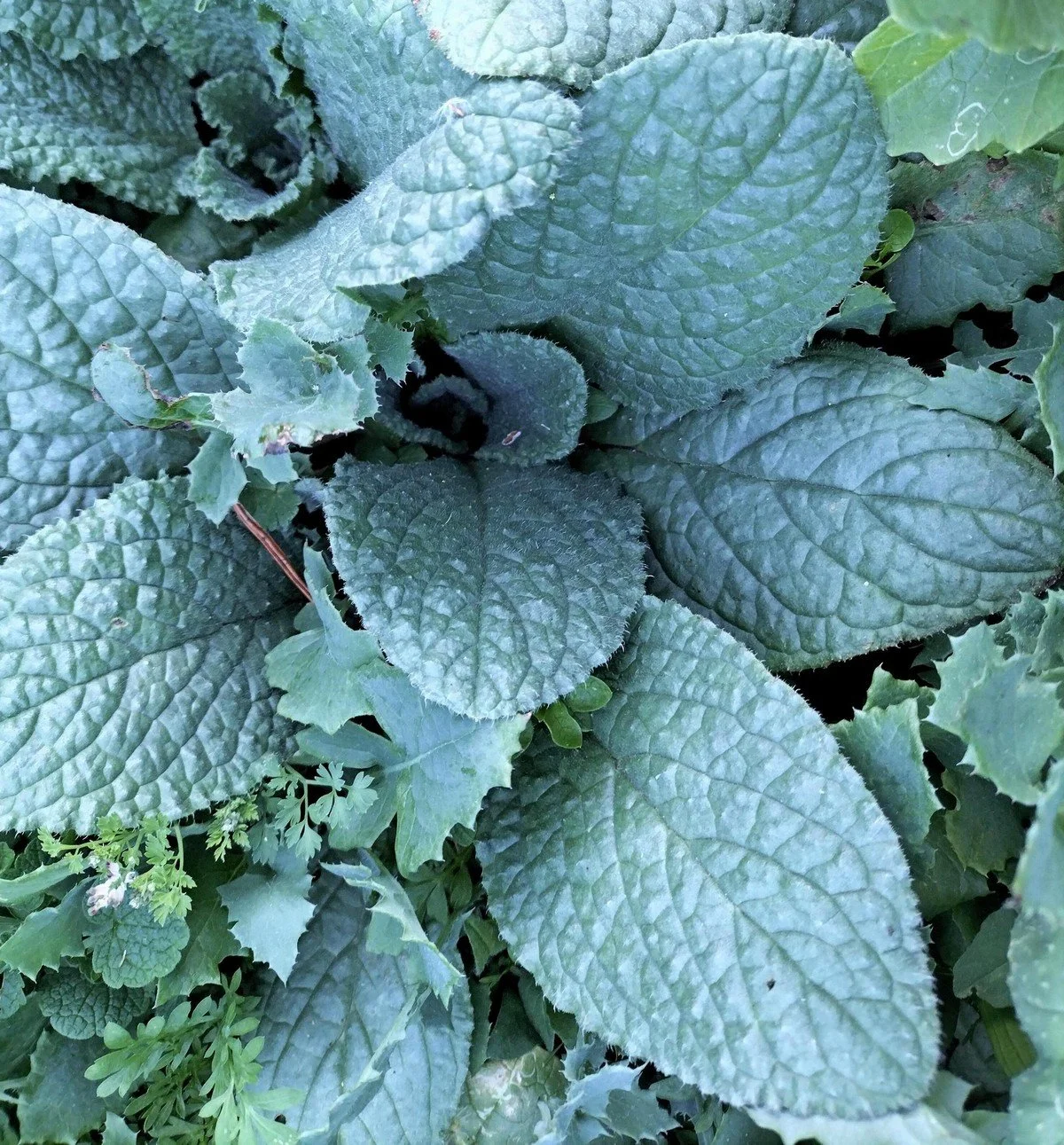
A young self-seeded borage rosette shading the soil—recognising seedlings early helps you decide what stays and what goes.
The ecological gardening perspective
Gardens are living systems—plants move around, seeds travel, and useful opportunities arise outside our original plans. Of course, volunteer seedlings don't always get to stay. Sometimes there are simply too many, or they are in the wrong spot and need to go.
The goal of ecological gardening isn't to eliminate every uninvited plant, but to build a resilient ecosystem that supports soil life, pollinators, and birds. Before you pull out that self-seeded borage, take a moment to see what it’s doing for your patch. You might decide it has earned its place—for now.
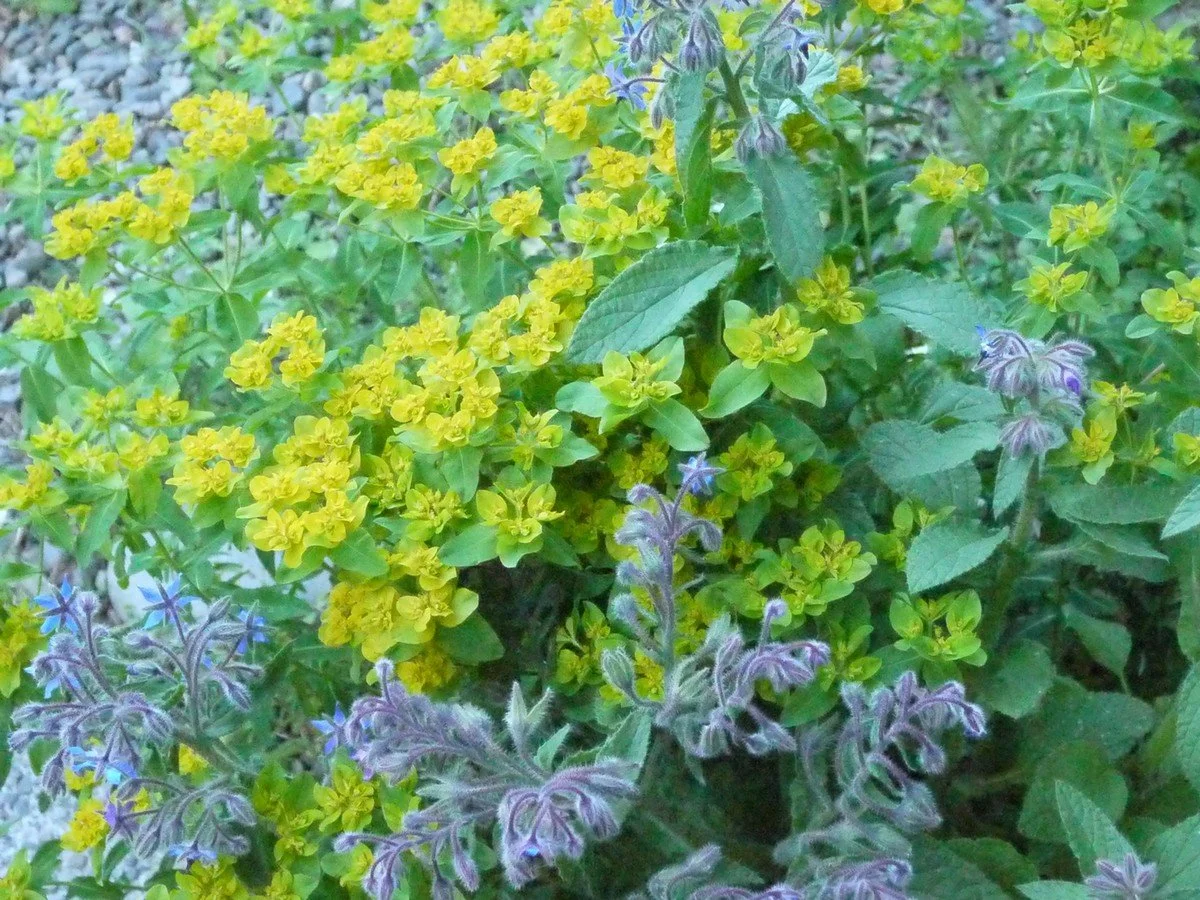
Living systems in action: self-seeded borage weaving naturally through existing garden plantings.