Repairing the soil
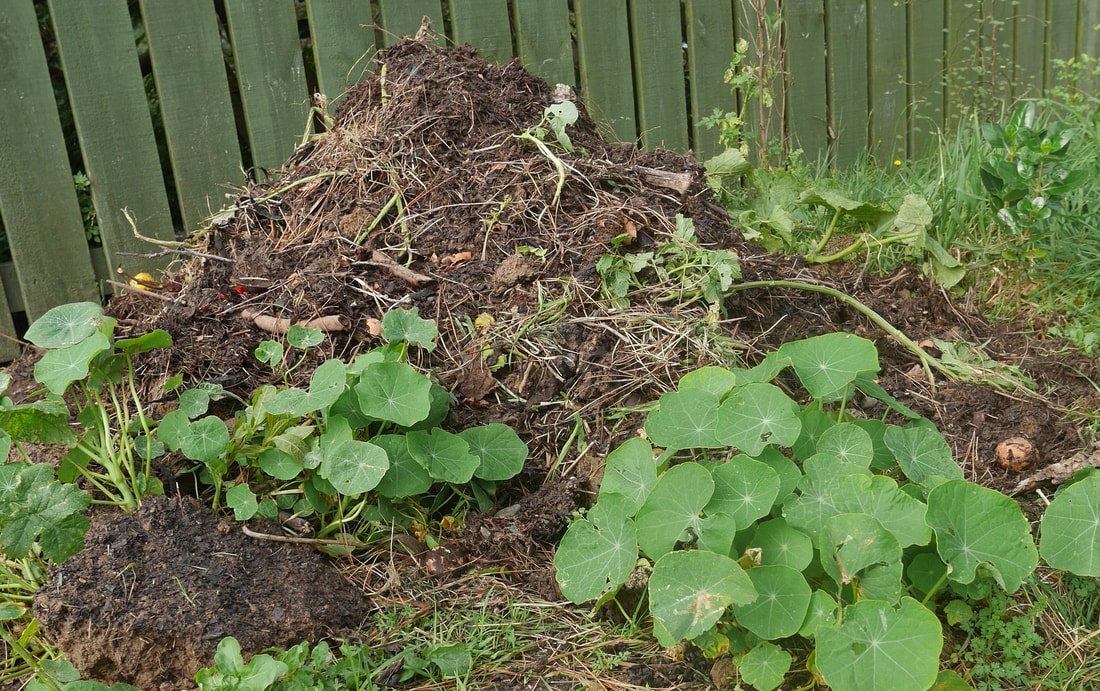
A simple compost pile produces soil alive with worms and other essential creatures for the garden.
Encourage a diverse kingdom of creatures in the soil
Many of the gardens we work in haven’t had attention for several years and the soil is dormant.
Our aim is to build a healthy underground soil community. This complex community of microbes, bacteria, fungi, protozoa, nematodes, and more is the soil food web. Each of these creatures bring benefits to the soil, the plants, and the people who eat those plants.
How we restore the soil
We do this continually as part of our gardening practice. The soil life helps fix nitrogen from the atmosphere and feeds other nutrients to the plants.
Some ways we improve soil:
Keep the soil covered with plants. Either fast growing cover crops or any surplus plants you have. The live roots feed and aerate the soil. Before the plants go to seed, they can be chopped and dropped as mulch.
Use benign non-invasive weeds as mulch on top of the soil.
Reduce water and nutrient run off where possible.
A thick layer of compost and/or mulch to improve the soil structure and help hold water. The worms will do the mahi.
Weeds indicate what the soil needs and grow where they are needed. Leave them be (except the invaives) if they don’t annoy you. Do cut them down before they go to seed.
Leave rotting branches around to encourage mini ecosystems and diversity.
We work with what’s there rather than making radical changes. With some gentle input from us, nature will restore balance. Just as it took a while to deplete the soil, improving it isn’t a quick fix. Make it part of your regular gardening.
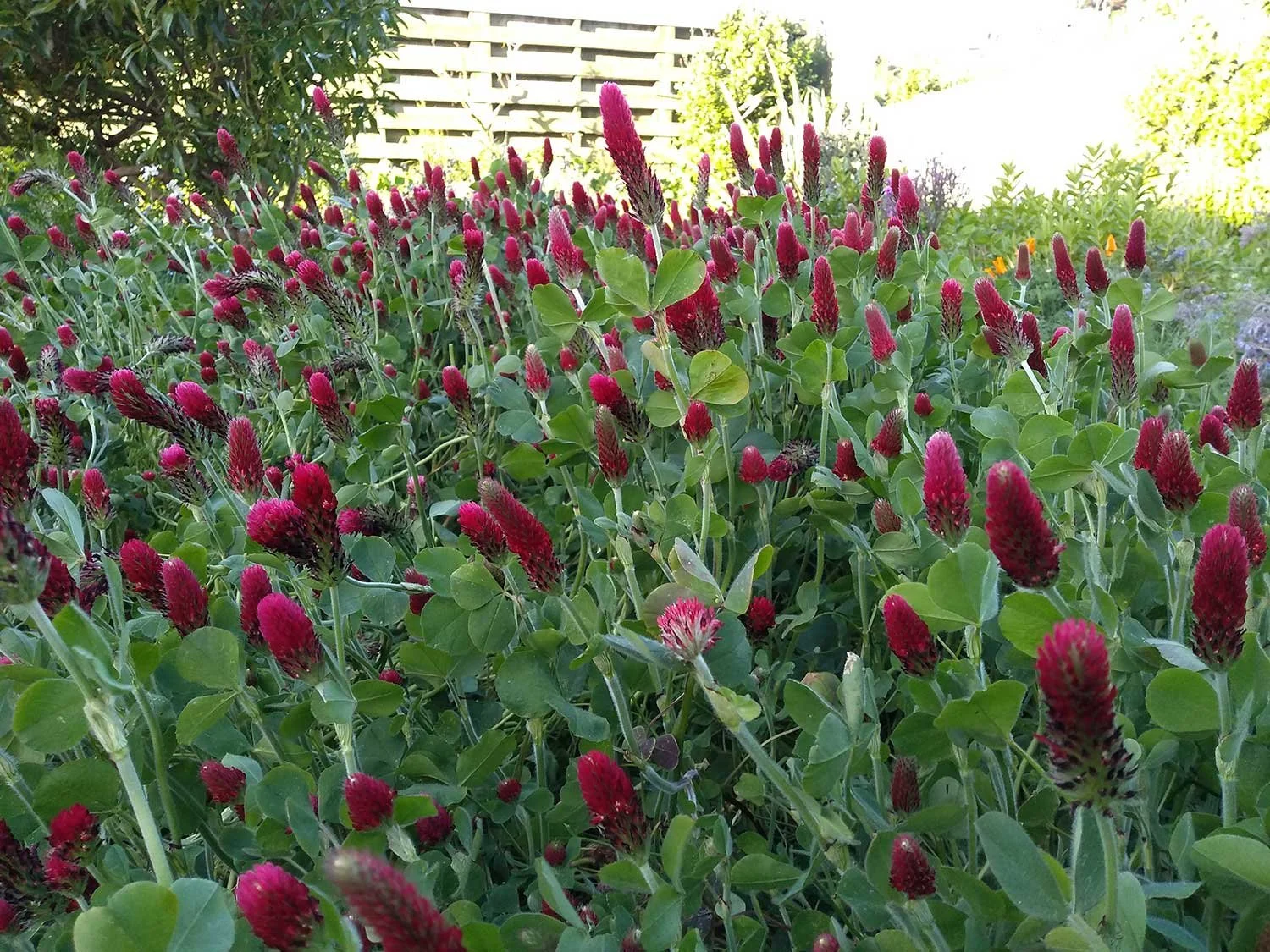
Crimson clover adds nitrogen to the soil, feeds bees and looks good.