Weeds - dispose or use? Reusing weeds to improve soil health
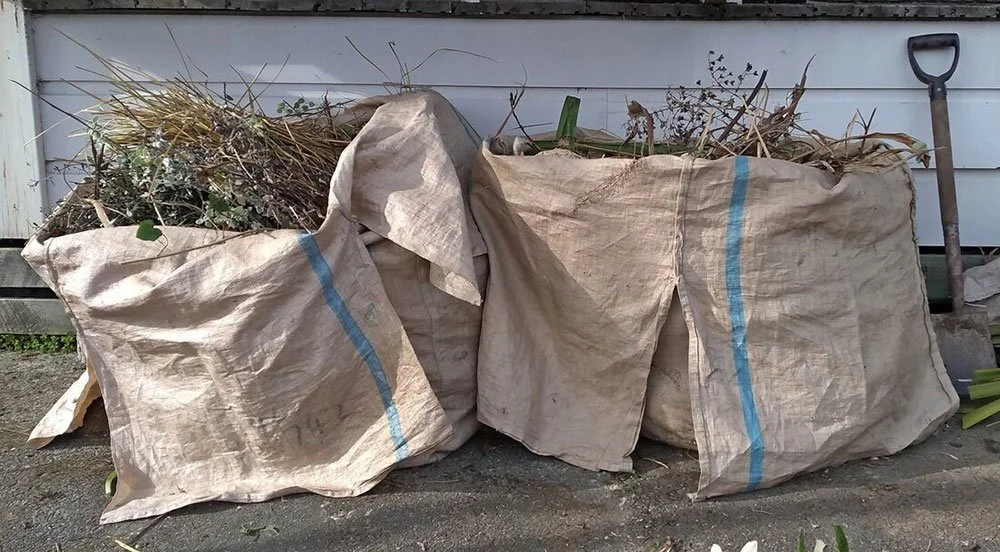
Woolsacks full of weeds for green waste at the tip.
If clients don’t mind, we often leave weeds onsite to rot down naturally. This allows them to act as compost, smother existing weeds, and reduces the labour and cost of removing green waste. Anything we can do to improve soil structure and support healthy soil microbes is a win for the garden.
Reusing organic matter is a simple, low effort way to build healthier soil, improve moisture retention, and keep nutrients on your land rather than sending them off site.
How to reuse organic matter
Organic matter is anything that once grew. Learning how to reuse it effectively can save you time, money, and unnecessary trips to green waste.
Identify invasive plants versus manageable weeds
The first step is learning to tell the difference between invasive plants and less aggressive weeds, ideally when they are still small.
Some weeds will curl up and die without much effort. Others reproduce rapidly using underground runners, fragments, or seed and need a different approach.
Reusing non-invasive weeds
For less aggressive weeds, you can often leave them in the garden to improve the soil.
Place them on top of garden beds or around established plants to rot down naturally. As they break down, they help improve soil structure and feed microorganisms, which in turn helps the soil hold water and nutrients.
This approach mimics natural systems and reduces the need for additional compost or mulch.
Managing invasive plants safely
Invasive plants need more care to avoid spreading them further around your garden.
Depending on the plant, you can:
Dig, pull, or rake them up, such as tradescantia, and pile them in a contained compost area or corner of the garden.
Cover the pile with black polythene to speed up decomposition and reduce the chance of regrowth.
If regrowth occurs, manage the edges of the pile or carefully treat new growth while the bulk of the material breaks down.
Only reuse this material in the garden once you are confident the plants are completely dead.
Another option is to place invasive plants in a waterproof container, add water or allow rainwater in, and seal it with a lid. Once the plants have rotted down, the liquid can be used to water the garden. While nutrient levels aren’t guaranteed, it’s a way to reuse material rather than sending it to landfill.
If needed, invasive plants can also be bagged and taken to green waste.
Avoid spreading invasive plants around your garden
To reduce the risk of spreading invasive plants, keep separate piles in different areas of your garden, such as front and back. This helps prevent accidentally moving plant material into new areas where it could establish again.
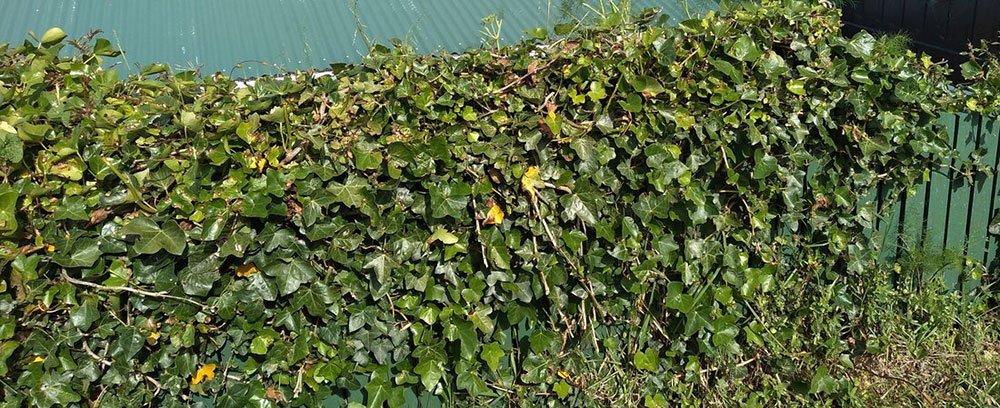
Ivy is one of the most common pest plants we come across. It grows up trees and shrubs and smothers them. Birds eat the ripe berries and drop the seeds in the bush with a dollop of fertiliser.
How to identify invasive plants in Wellington
If you’re unsure whether a plant is invasive, reliable local resources are essential.
Weedbusters provides clear guidance on identifying and managing invasive plants in Aotearoa.
For region specific information, including invasive plants in the Wellington region, see resources from Greater Wellington Regional Council.
Learning to identify invasive plants early makes garden management easier and helps protect surrounding gardens and natural areas.
If you’d like help applying these ideas in your own garden, a garden consultation can be a good place to start. We can walk through your space together, help you identify invasive plants, and talk through practical next steps that suit your site, your time and how you like to garden.