
Love it when I get carried away in my research.
A friend who knows far more about butterflies than I do commented that seeing lots of Red Admirals usually means there are nettles nearby. That didn't make sense at first. We don't have ongaonga on site and I hadn't noticed any common nettles either.
The breakthrough came when I realised a plant I'd initially thought was galinsoga was actually Asthma Weed (Parietaria judaica).

Kahukura, Red admiral butterfly, Vanessa gonerilla. Thank you Moths and Butterflies of NZ Trust for the photo.
Asthma Weed belongs to the nettle family (Urticaceae), though not a true stinging nettle. Once I worked that out, the butterfly comment made a lot more sense. Surveys of butterfly host plants in New Zealand include both Urtica nettles and Parietaria species. [nzbutterflies.org.nz]
Spotting the difference
The confusion wasn't helped by the fact that Asthma Weed and Galinsoga can look surprisingly similar at a quick glance. The easiest way to tell them apart is:
Asthma weed (Parietaria judaica)
Leaves alternate up the stem.
Tiny greenish flower clusters.
No obvious white petals.
Member of the nettle family.
Galinsoga (Galinsoga parviflora)
Leaves occur in opposite pairs.
Tiny daisy-like flowers.
Yellow centre with usually five white ray florets.
Member of the daisy family.
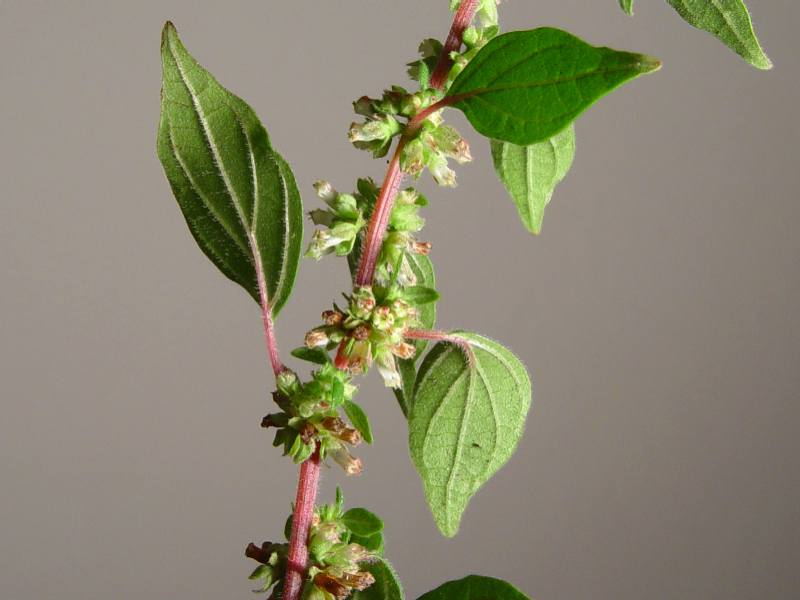
Asthma weed (Parietaria judaica)
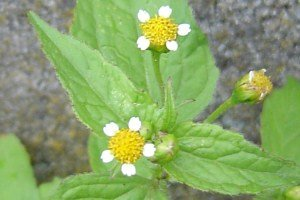
Galinsoga (Galinsoga parviflora)
Why the butterflies mattered
The lesson for me was that sometimes a field observation points you in the right direction, but not how I expected. I was looking for "nettles" and mentally picturing ongaonga. What I actually had was another nettle cousin hiding in plain sight.
A useful reminder that plant identification often starts with asking why something in the ecosystem is there. In this case, the butterflies were the clue